
Optimizing for AI Answers: What Our Research Reveals About Source Inclusion
As AI-generated search experiences continue to reshape how users discover and evaluate information, visibility within AI Overviews (AIOs) has become a growing priority for brands—particularly in high-consideration categories. While many assumptions have emerged around how AI models select sources, there has been limited empirical research available to validate these beliefs.
To better understand what drives AI Overview source selection, Sosemo conducted a structured study analyzing the characteristics of content cited by AI Overviews across Google and Bing. The research examines how traditional SEO signals, content freshness, keyword optimization, and linking behaviors intersect with generative search outcomes. The findings offer practical insights for brands looking to improve both organic search performance and AI visibility through Generative Engine Optimization (GEO).
Methodology
The study followed a consistent, repeatable approach across platforms:
- Ten widely searched topic areas were identified, each aligned to a solution or offering.
- Keyword research was conducted to identify queries commonly searched across the full decision journey—from problem identification through solution evaluation and brand‑specific exploration.
- Ten keyword phrases—one for each topic area—were mapped to each stage of the decision journey.
- All keywords were searched using Incognito mode on Google, followed by replication on Bing.
- Every source cited within the resulting AI Overviews was logged individually.
- For each cited source, data was collected on citation frequency, source position, content freshness, keyword optimization levels, and organic SEO rankings.
- Each page was reviewed for outbound links and analyzed later for inbound linking relationships across cited content.
This methodology enabled comparative analysis across platforms while isolating the signals most consistently associated with AI Overview inclusion.
Get the Full AI Search Study. Schedule a Live Review Meeting.
Contact Us
Correlation Between SEO Rankings and Source Rank in AIOs
One of the clearest patterns to emerge from the study is the strong relationship between organic search rankings and AI Overview source rank. The majority of cited sources appear within the top organic results—typically the top 20 on Google and top 10 on Bing—reflecting AI’s reliance on already highly visible content.
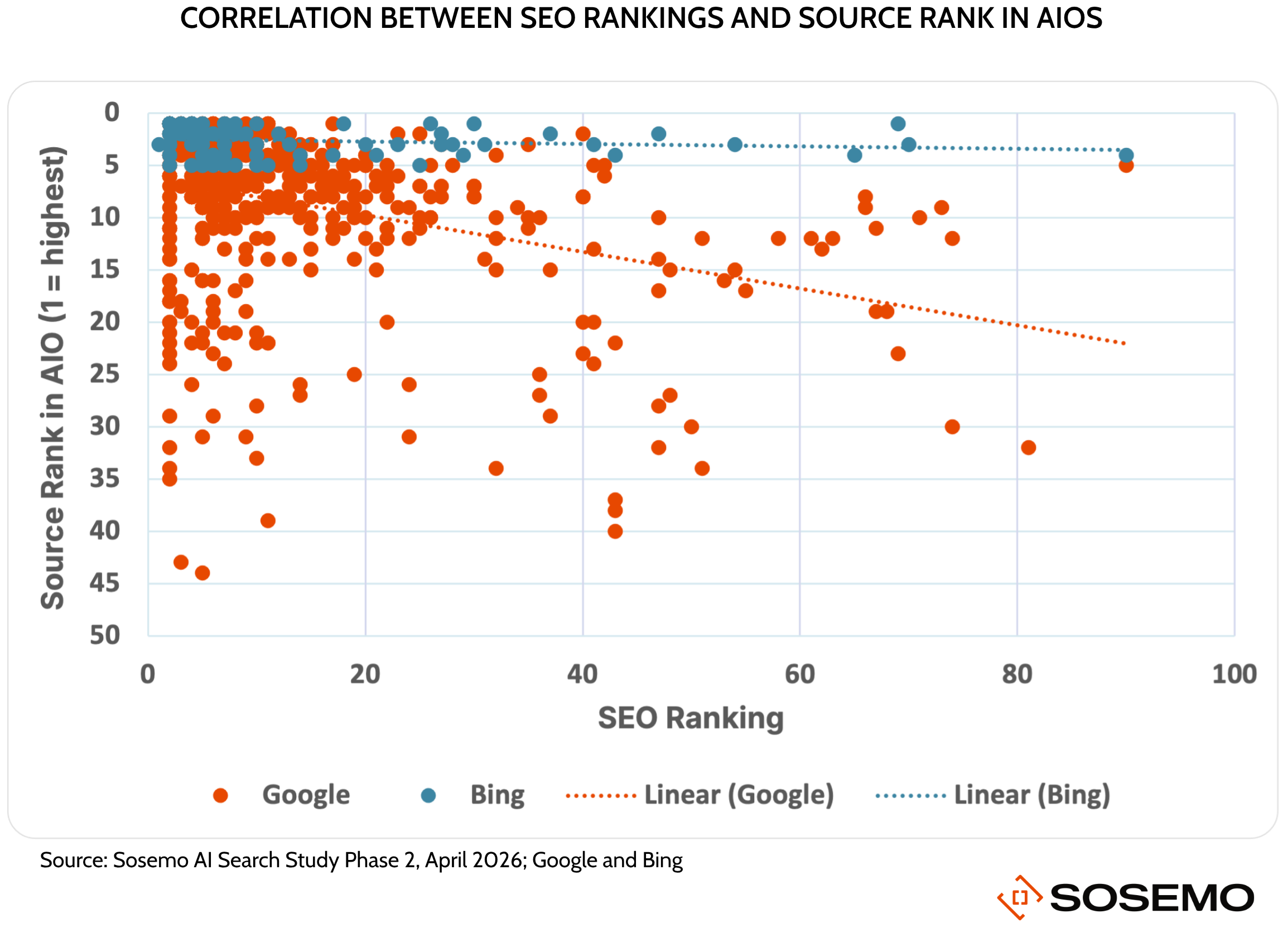
While a small number of outliers exist, suggesting nuanced platform-specific differences, the overall trend is consistent: strong SEO performance significantly increases the likelihood of being cited within AI Overviews. Given the limited number of sources included in AIOs compared to traditional search results, competing for top organic rankings remains foundational for AI visibility.
Keyword Optimization of AIO Sources
Interestingly, high levels of traditional keyword optimization are not a prerequisite for AI citation. While organic rank continues to matter—particularly for top citations—many AI-sourced pages rely on semantic relevance rather than dense keyword targeting.
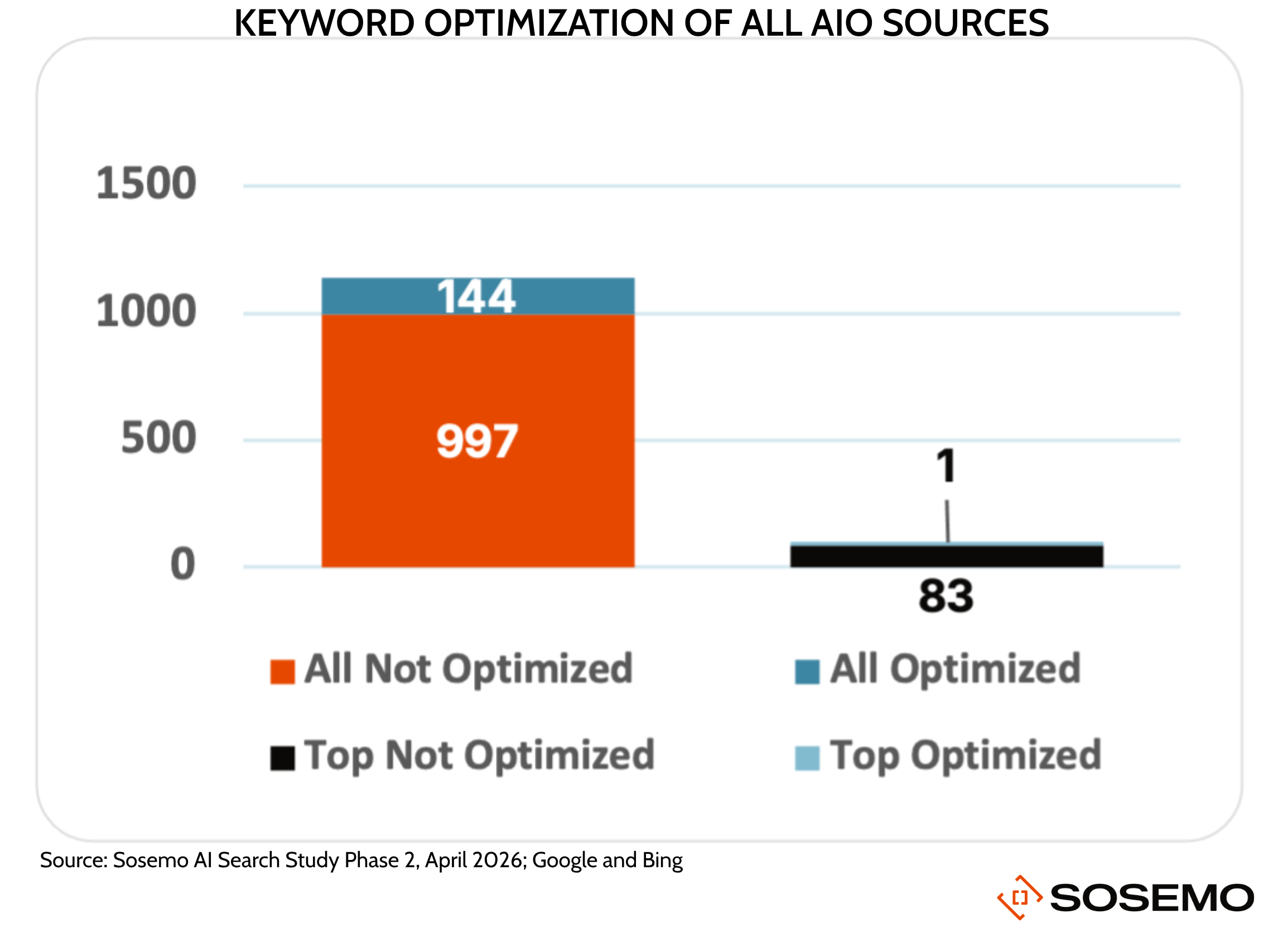
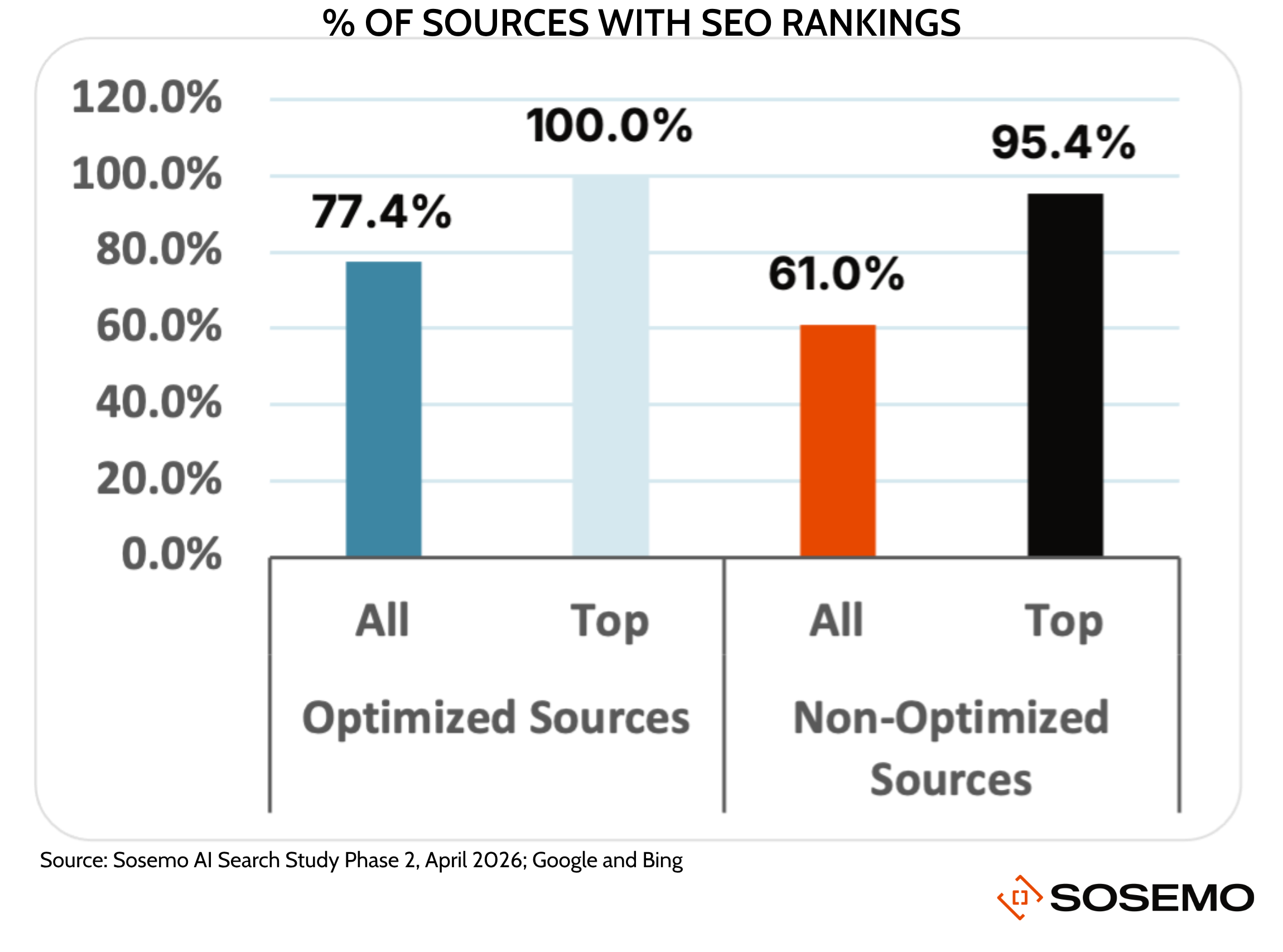
This reinforces the importance of holistic SEO strategies that prioritize intent satisfaction, topical authority, and E‑E‑A‑T signals. Keyword optimization can take many forms, from targeted usage to broader semantic coverage, but it should ultimately support organic rankings rather than serve as a stand‑alone tactic.
Correlation Between Keyword Optimization and Source Rank in AIOs
When examining keyword density more closely, most cited sources—especially on Google—contained minimal target keyword usage. This further validates AI’s ability to interpret relevance through semantic understanding rather than literal repetition.
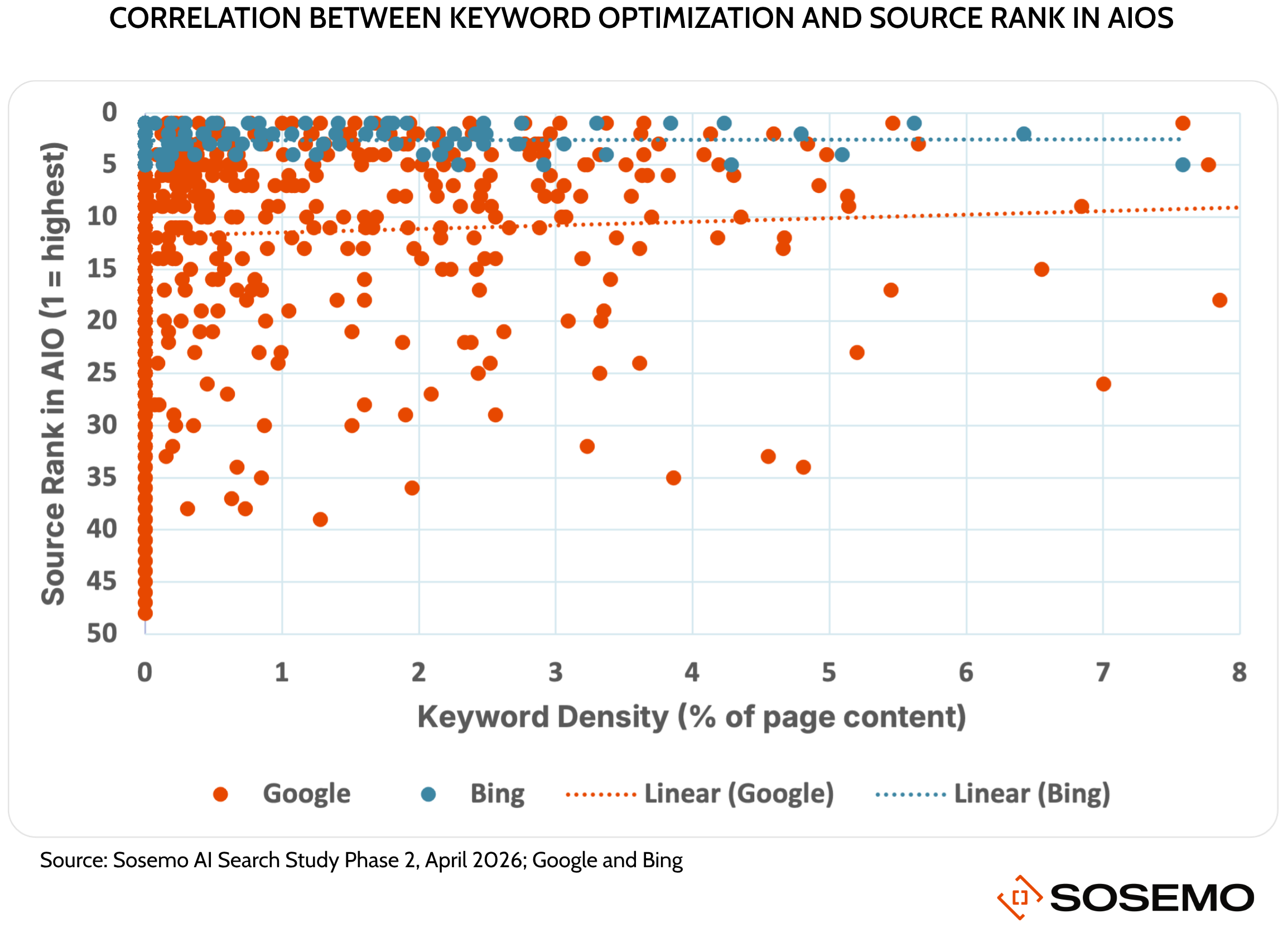
While a slight correlation exists between keyword presence and higher source rank, the strongest concentration of top‑ranked citations appears among pages with keyword density below 1%. The takeaway for brands is not to eliminate keywords altogether, but to adopt a context‑over‑count approach—blending strategic mentions with natural language, related entities, and semantic signals informed by competitive keyword research.
Freshness of AIO Sources
Content freshness plays a nuanced role in AI source selection. In many cases, top AI citations overlap with top SEO results—even when that content is not recently published—suggesting that strong rankings may outweigh recency when authoritative content exists.
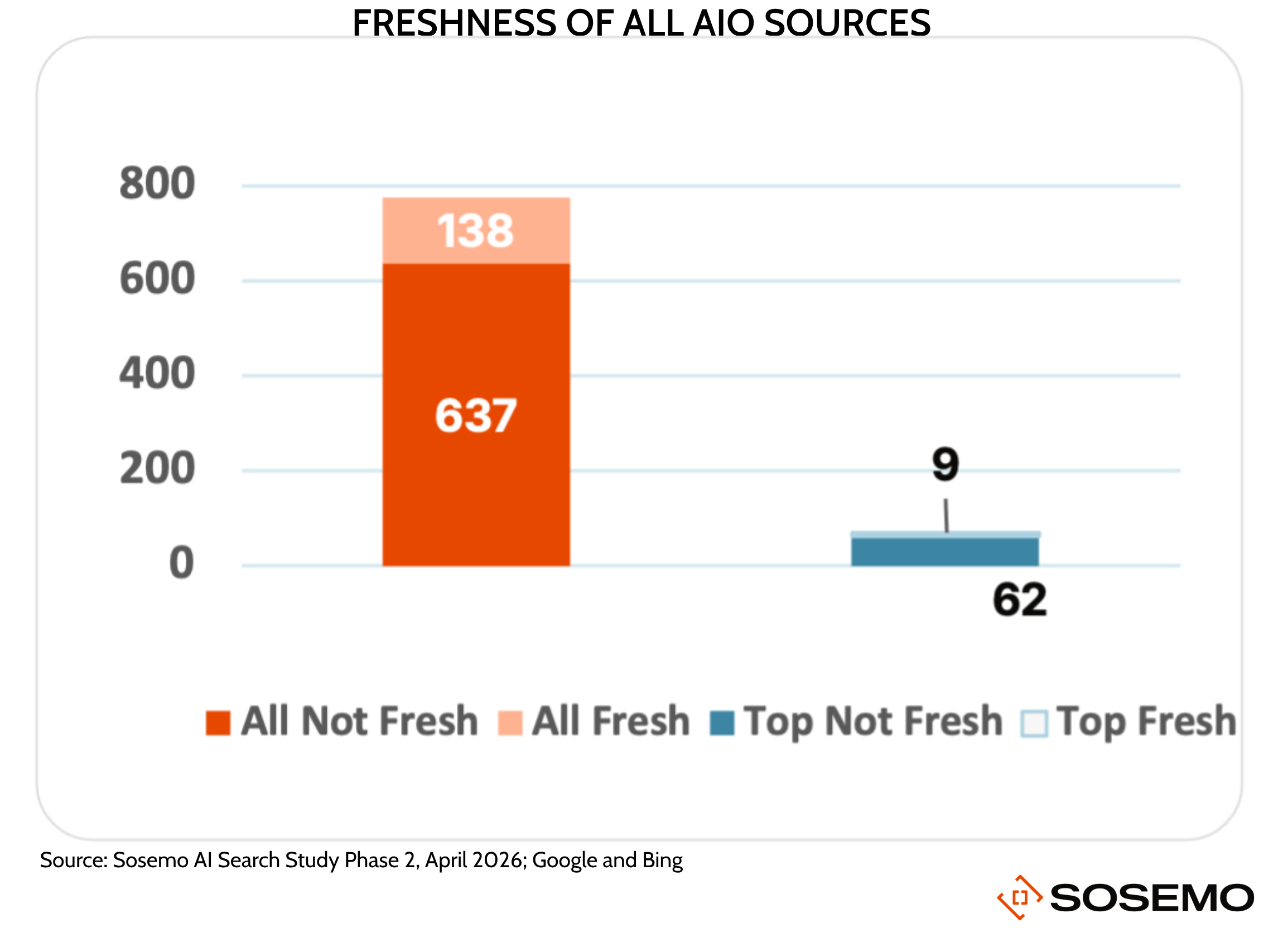
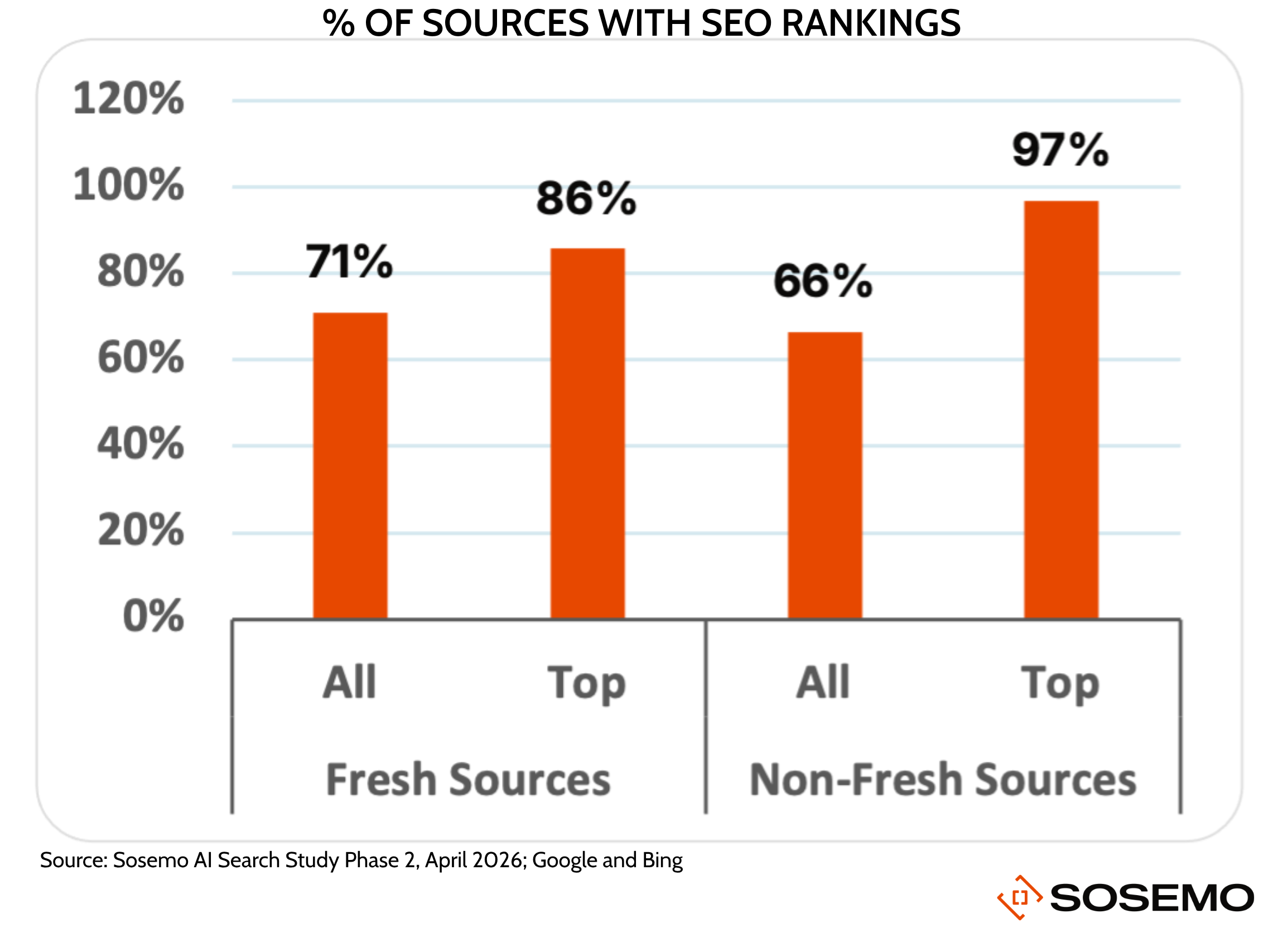
At the same time, newer content demonstrates a higher probability of citation among non‑top sources. Fresh pages make up a larger share of total cited sources than top‑ranked ones, indicating that recency can act as a differentiator when rankings are competitive. With rising content production velocity across industries, freshness alone is unlikely to be a silver bullet; uniqueness, authority, and intent alignment remain critical.
Definition: Fresh content refers to pages published within the past six months.
Correlation Between Freshness and Source Rank in AIOs
Most cited sources were published within the past three years, forming the largest concentration across platforms. While more recent content tends to rank slightly higher within AI source lists, freshness on its own shows marginal influence due to the low positioning of many newer pages.
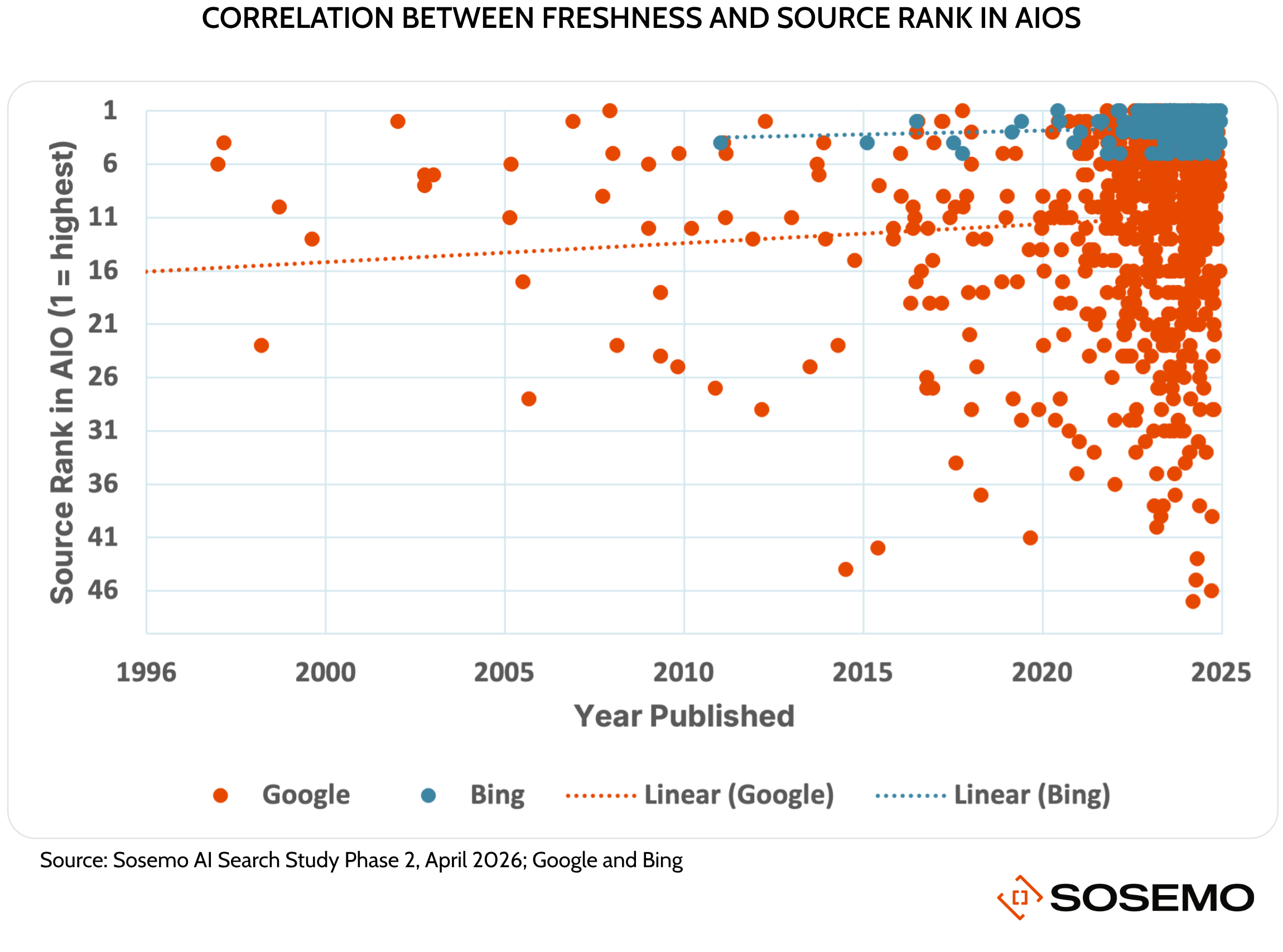
This presents two clear opportunities for brands: continually supplying AI systems with newly published pages, and revitalizing legacy content through updates or rewrites. Systematic refresh strategies can increase both organic performance and AI consideration.
Importance of Cross Linking in AIO Sources
Cross linking—both inbound and outbound—emerges as a meaningful, though not mandatory, signal for AI source inclusion. Roughly one‑third of all cited sources and more than one‑third of top sources demonstrate linking relationships with other AI‑cited content, indicating increased trust and relevance within a constrained citation environment.
Outbound and inbound link frequencies were nearly identical, suggesting comparable importance. Notably, sources without cross‑linking activity exhibited weaker SEO performance overall, reinforcing the role links play in authority signals—even as AI introduces algorithmic differentiation beyond traditional ranking factors.
Brands that actively link to high‑quality external content and secure links from relevant sources improve their likelihood of visibility within AI answers. While some insights from this analysis remain client‑exclusive, linking strategy continues to be a powerful lever across both SEO and AI ecosystems.
Importance of Internal Linking on AIO Source Inclusion
Internal linking also shows strong influence on AI citation patterns. A meaningful share of AI‑cited pages received links from other sourced pages within the same domain. Importantly, some of these internally linked pages had no measurable organic rankings, underscoring the weight AI places on contextual relationships within a site.
Strategic internal linking—particularly within body content using descriptive, keyword‑aligned anchor text—can increase the likelihood of multi‑source citations from a single domain. This reinforces the need to treat internal linking as both an SEO and GEO tactic rather than a structural afterthought.
Conclusion
The findings from this study reinforce a critical theme: AI Overview visibility is inseparable from strong organic foundations, but not dependent on outdated optimization tactics. AI source selection remains closely tied to SEO performance, with top citations overwhelmingly drawn from well‑ranked pages.
At the same time, keyword density and mechanical optimization play a limited role. AI models prioritize semantic relevance, intent satisfaction, and trust signals reflected through E‑E‑A‑T—often favoring content with minimal keyword repetition. Freshness can support inclusion, particularly for non‑top sources, but is most effective when paired with unique, authoritative content.
Linking strategies—both internal and external—add another layer of influence, strengthening thematic relationships and enabling broader citation coverage, even for pages without strong standalone rankings. Together, these signals point toward the need for an integrated SEO and GEO approach that balances rankings, semantic depth, strategic linking, and continuous content evolution.
What’s Next?
Insights from this research have been synthesized into updates to Sosemo’s GEO best practice framework. These learnings inform our optimization recommendations and are shared directly with active clients as part of our ongoing GEO service offering—helping brands expand their visibility across AI Overviews and AI Answers within the health sector.
What is GEO?
GEO or Generative Engine Optimization is the process of refining and structuring a brand’s content so it is effectively recognized, prioritized, and surfaced by AI-powered search engines and generative models, increasing visibility in AI-generated answers and overviews.
Learn More About Our GEO Services.
Contact Us